
Description
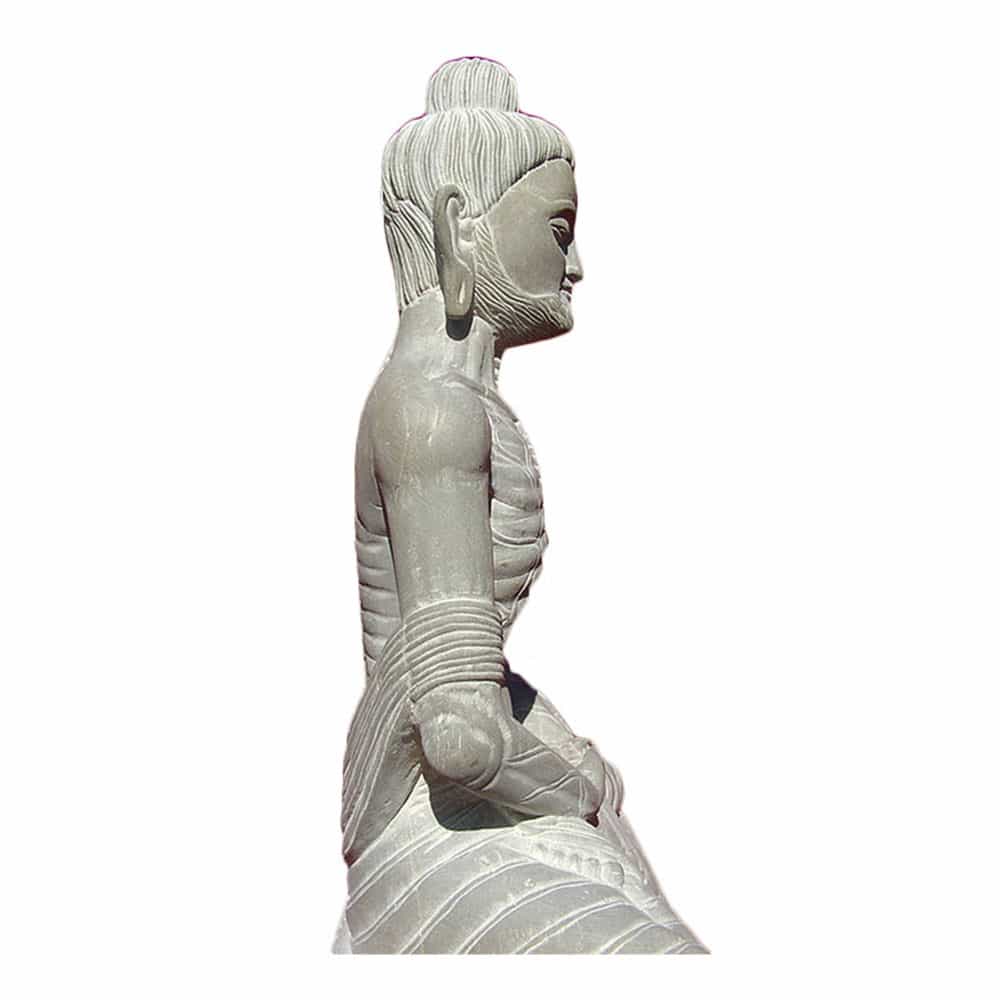
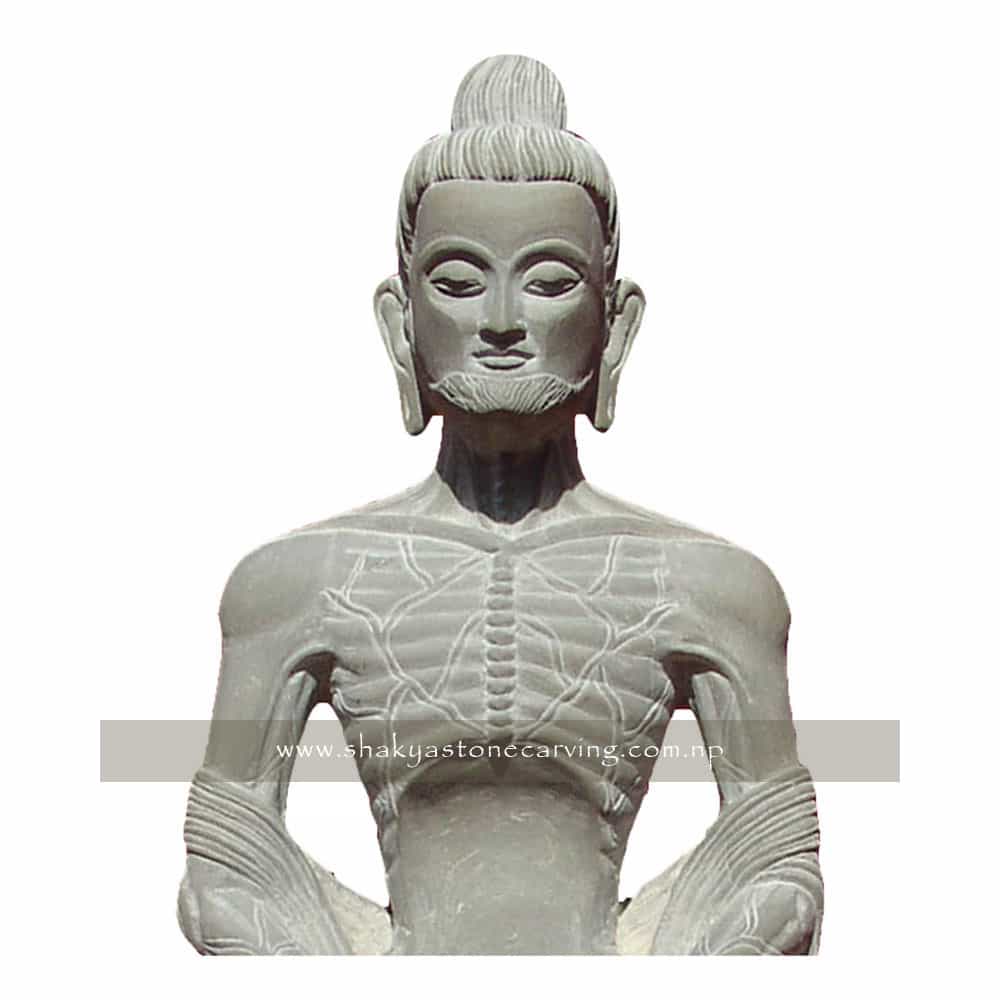
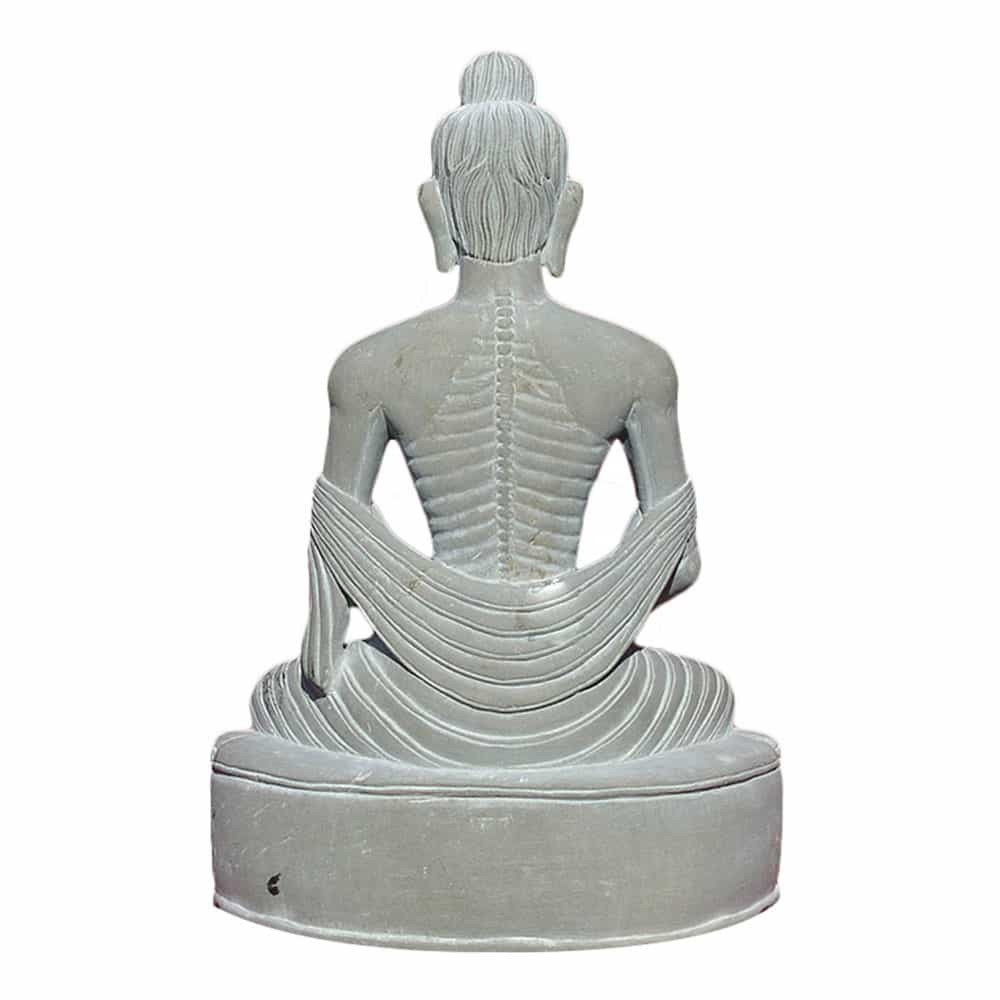
It’s an oft-told story: for seven weeks, Buddha sat beneath the bodhi tree, meditating after having achieved enlightenment. He was, of course, also fasting — and while depictions of the seated Buddha nearly always portray him with a healthy physique, a number of rare sculptures focus on illustrating the realities that wore down his body. A gray schist figure from the ancient region of Gandhara, known as the “Emaciated Buddha,” represents one of just a few known, fully intact examples of this small, starved group.
With a torso that reveals his rib cage, bony shoulders, and even sinewy tendons and veins, the Emaciated Buddha is the standout of the 38 lots, which all arrive from a European’s family collection founded in the 19th century. They include a number of meditating Buddhas of a more regular weight, renderings of female deities, and a schist figure of a mustachioed, crouched Winged Atlas. Seated on a pedestal whose base features small, carved worshippers gathered around a stupa, the Emaciated Buddha is also the largest object of the collection: it measures over three feet tall. According to Dr. Arne Sildatke, Auctionata’s head of Asian art, very few sculptures of an emaciated Buddha were ever made, and such large, nearly life-sized ones are especially rare. Although his sunken state may shock, he still conveys the strength — both mental and physical — that more typical representations of the enlightened teacher embody.
“Nevertheless, it is not a symbol of death and resurrection but of self-empowerment and overcoming of suffering by the human spirit. It is a manifest to Buddha’s unbelievable will and dedication and therefore an iconic image for Buddhist worshippers and followers on his path alike.”
This Buddha was likely once displayed in a prominent location, serving as an object of contemplation for worshippers. Other known emaciated Buddhas are today scattered around the world: Pakistan’s Lahore Museum has a stunning, complete figure that also features a long beard, a reflection of Buddha’s asceticism. Fragmented versions are found in many institutional collections, from the Peshawar Museum to the Metropolitan Museum of Art, whose example is, unfortunately, headless, but reveals strict attention to anatomical details in its remaining body. Much of the power of these works to evoke Buddha’s devotion to his legendary cause stems from the artists’ use of deeply incised lines — a characteristic of Gandharan art that resulted from a cultural dialogue between East and West.


Reviews
There are no reviews yet.