Description
Appearance:
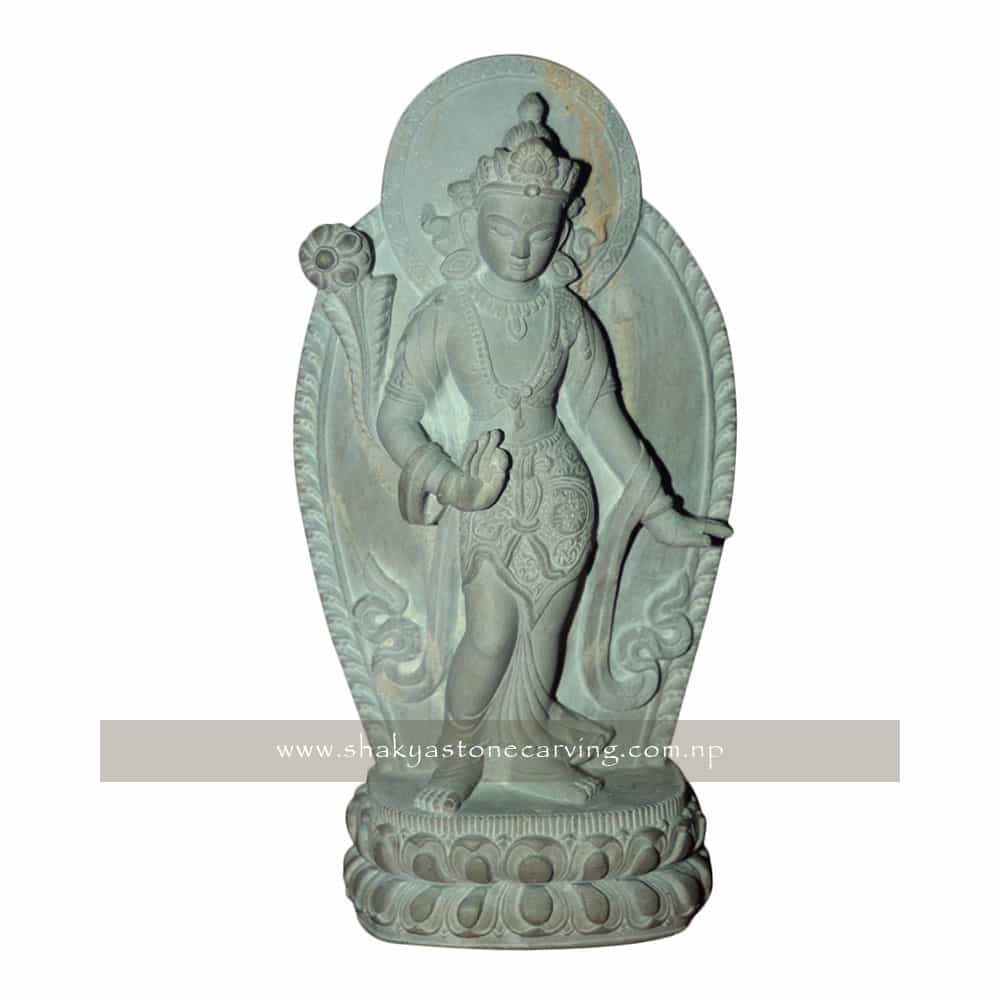
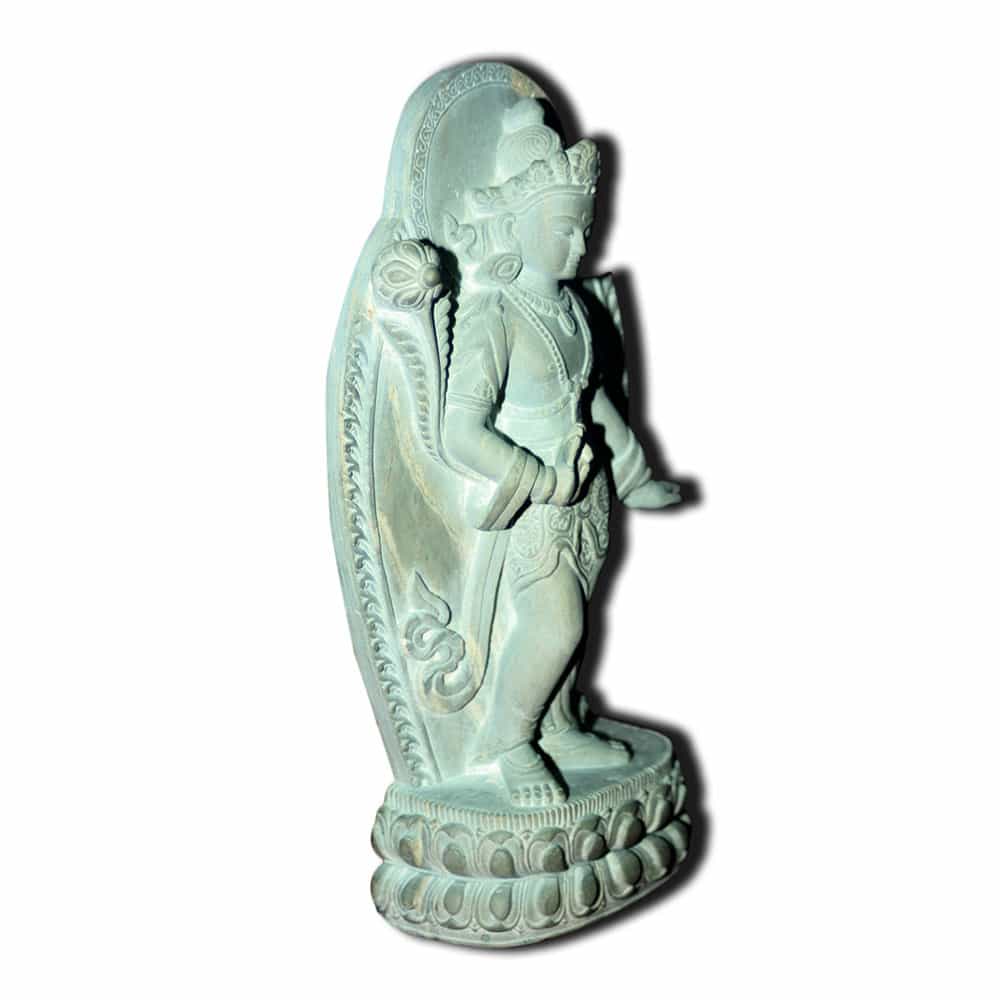
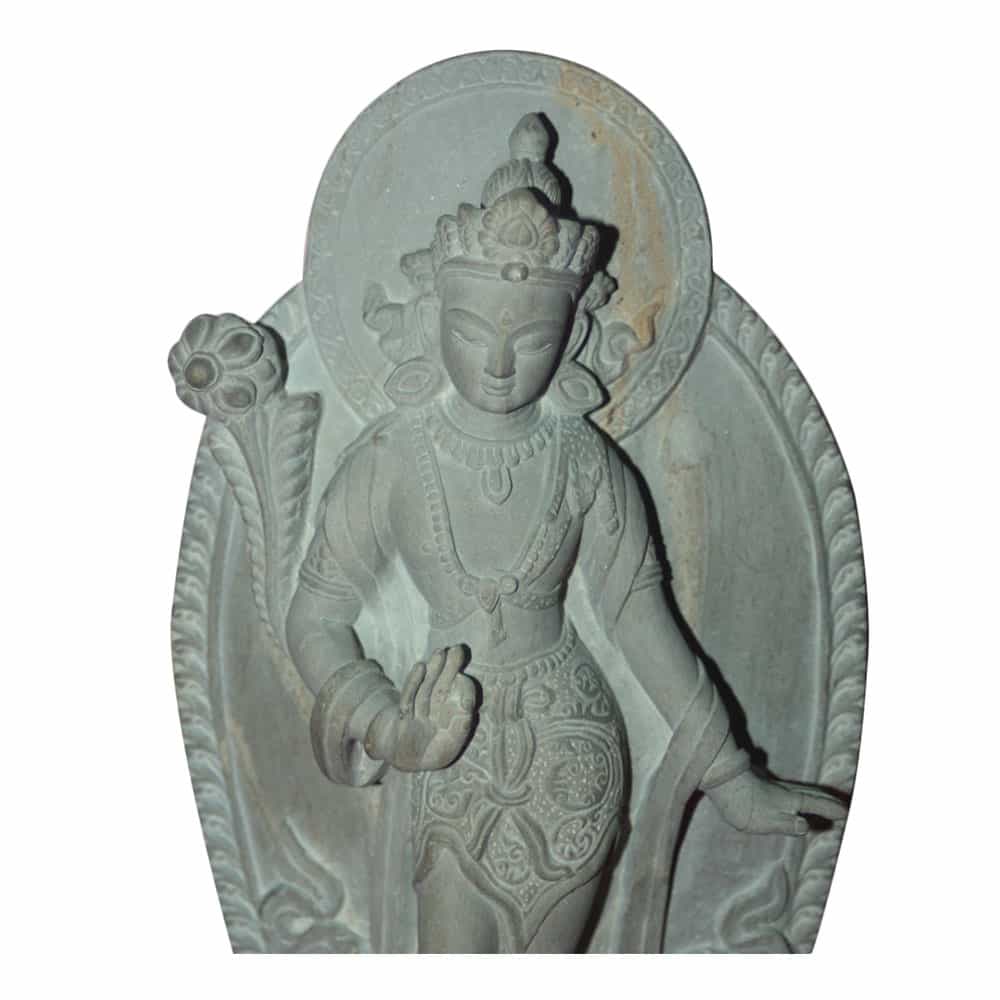
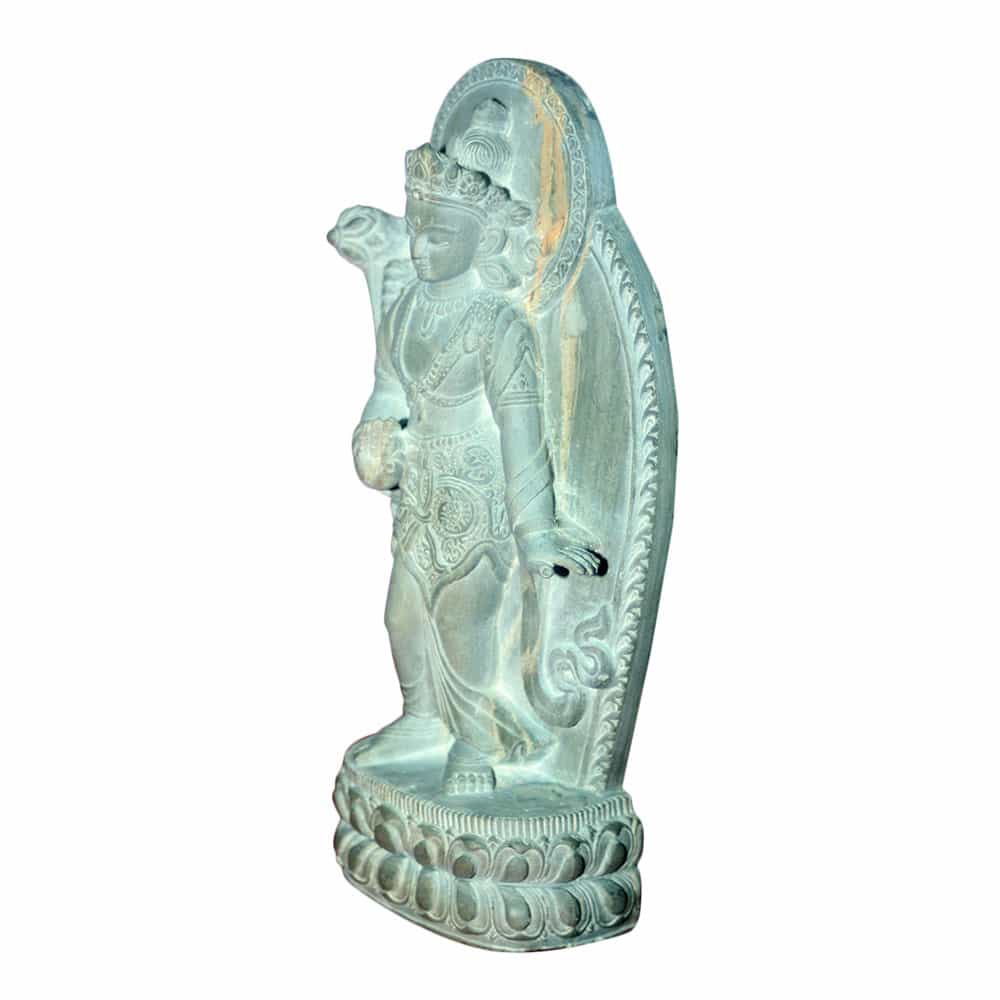
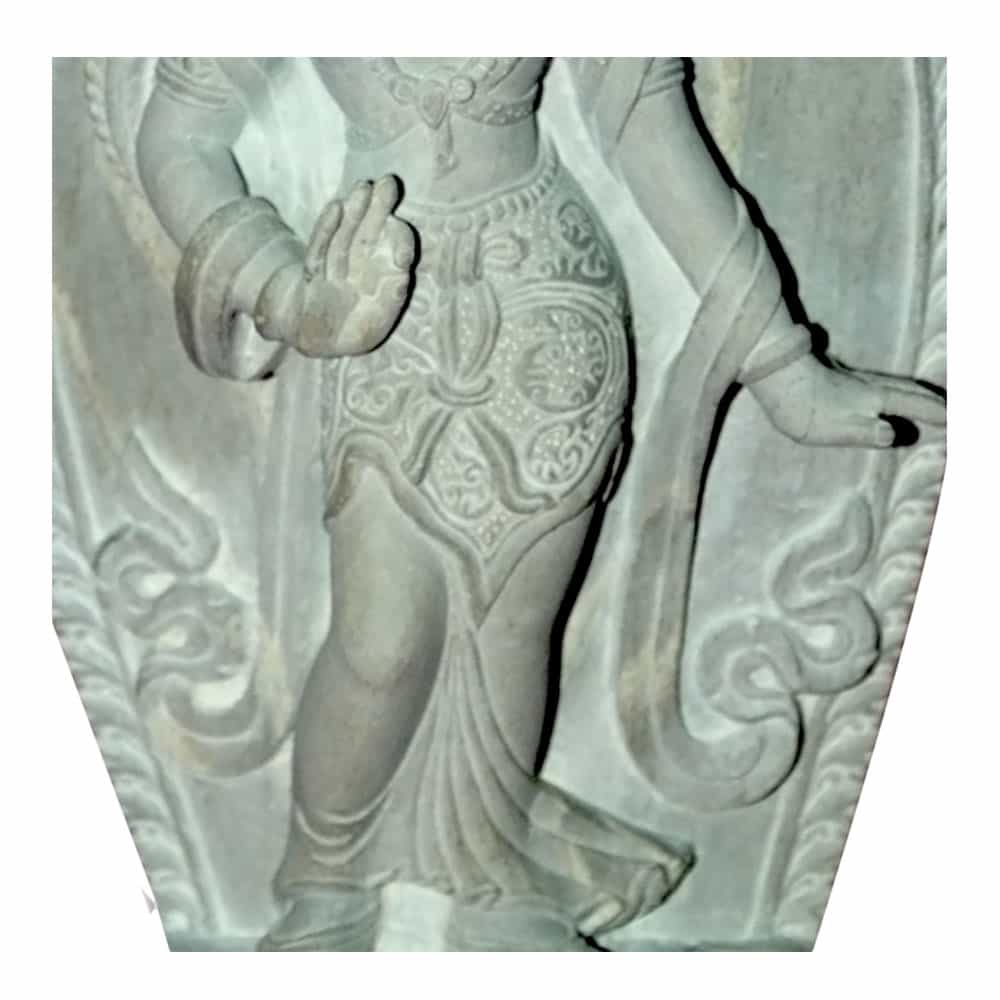
Any Lokeshvara with one face and two hands that typically performs the gesture of generosity with the right hand and holds a lotus stem with the left, having the right leg pendant. (This is like a male version of the typical appearance of Green Tara).
A term applied to several specific forms of Lokeshvara:
[1] Khasarpani Amoghapashaand
[2] Lokeshvara ‘Resting in the Nature of Mind.’ Both of those belong to the Kriya Classification of Tantra. The term is also applied to a form of
[3] Lokeshvara arising from the Sarvadurgati Parishodhana Tantra (Yoga Classification).
A name for Lokeshvara after he provided money and resources (pana) to an upasaka practitioner named Shantivarman. Later, once the resources were exhausted Lokeshvara flew (khasar) to meet the practitioner. Or, the name is also explained as ‘the exhausting of the panas.’
Standing versus Seated:
The modern convention is to refer to standing figures of Lokeshvara in simple form, one face and two hands, as Padmapani. This can also be supported by Nepali Buddhist tradition and their understanding of the descriptions of the One Hundred and Eight Forms of Avalokiteshvara. It must also be recognized that the term Padmapani is commonplace in modern Nepalese Buddhist terminology and not necessarily the result of borrowing from modern Western scholarship. Aside from being a common epithet for simple standing forms of Lokeshvara how can the term Padmapani be applied to seated forms? The various seated forms found, post first millennium, can generally be identified with precise names other than with the general and generic term Padmapani. The real confusion in identification arises with the simple forms of Lokeshvara from the regions of Pala India, Swat and Kashmir, or possibly a few from Early West Tibet or the Western Himalayas, that date to the last half of the first millennium and early second. At this time there does not appear to be any evidence that there is a specific seated form of Lokeshvara that is known textually as Padmapani. Again, Padmapani based on the evidence appears to be a general epithet applied to simple two armed forms of Lokeshvara without any textual basis.
Function & Ritual Use:
A sculpture figure of Lokeshvara can be made as a single object for personal or public use. The three principal bodhisattvas, Manjushri, Lokeshvara and Vajrapni are commonly created as a set of three, known as the Three Lords of the World. Lokeshvara can be found as a retinue figure standing to the right or left of a larger image of Shakyamuni or Amitabha Buddha. It is very common to see sets of the Eight Great Bodhisattvas flanking a central Buddha image. The smaller sculpture are generally created for personal use and the larger sculpture found in public temples and shared ritual spaces.
Form & Style:
The general form is apparent, a standing figure. There are a great many aesthetic varieties in greater India. Some regions prefer a ‘tribanga’ pose, while others a ‘dvibanga’ pose. The ‘tribanga’ posture depicts the head slightly crooked to one side and the hips slightly jutting out on the other side of the body. The resulting appearance is of the body having three distinct angles. The ‘dvibanga’ depicts two angles with the head remaining straight and upright. In locations such as Khurkihar an erect posture with the legs together is preferred. There is no correct or orthodox posture for the standing form. The aesthetics of the body are determined regionally. This is also the case for Swat, Kashmir, Nepal and Tibet. The forms of the body are the same for Manjushri, Vajrapani and Maitreya, in the standing two armed posture. The only differences that can recognized are the special attributes of each deity such as the sword, vajra scepter, wheel, stupa or water flask. If an attribute is missing or lost then the figure is typically identified as a Padmapani by many modern scholars and researchers.
Iconographic Forms (Textual):
– Amoghapasha (All Forms)
– Amoghapasha/Khasarpani Conflation
– Ashtabhaya Trana Lokeshvara (Eight Fears)
– Chaturbhuja (Four Armed)
– Chintachakra Lokeshvara
– Chintamani Lokeshvara (Standing with a Tree)
– Chintamani Lokeshvara (Red, Four Hands)
– Chittavishramana (Resting in the nature of mind)
– Eight Fears Lokeshvara (All Forms)
– Eleven Faces (All Traditions) (Arya Avalokiteshvara Ekadashamukha Nama Dharani)
– Eleven Faces & One Thousand Arms (Maha Karunika Dharani Sutra)
– Eye Clearing Lokeshvara
– Hala Hala Lokeshvara
– Half-syllable Lokeshvara
– Hari Hari Hari Bhavan Lokeshvara
– Jinasagara (Ocean of Conquerors)
– Khasarpana (Sky Flyer)
– Lokanata
– Lokanata, Wrathful (Black, 12 Arms)
– Nilakanta (Blue Throat)
– Padmapani Lokeshvara
– Padmapani Ekadashamukha
– Padmajala
– Padma Narteshvara Lokanata (Dance)
– Pagpa Lokeshvara Sculpture (108 Temples)
– Pema Lingpa Tradition
– Resting in the Nature of Mind (Semnyi Ngalso)
– Shristhikantha (Rakta) (Red, Karandavyuha Sutra)
– Simhanada Lokeshvara (Lion’s Roar)
– Sukhavati Lokeshvara
– Vajradharma, Red
– Vishva Ishvara Lokeshvara
– Others…

Reviews
There are no reviews yet.